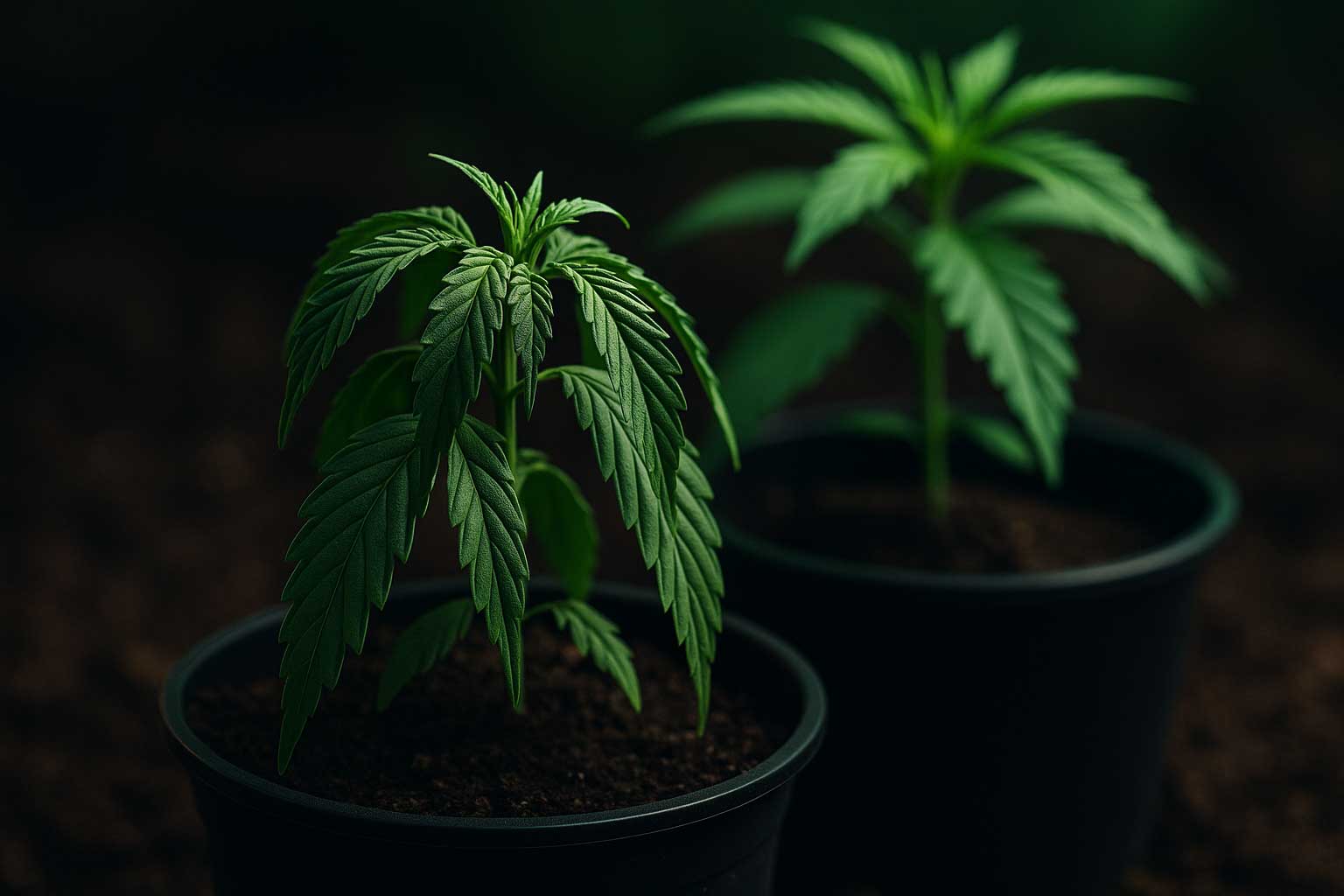
How to Help Drooping Cannabis Plants Stand Tall Again
Droopy cannabis leaves or stems? Don’t stress — drooping is usually a simple sign that something in water, light, environment, or roots needs a quick tweak. Use this guide to diagnose the cause fast and lift your plants back to attention.
Educational content for adults in legal regions. Always follow local laws and cultivate responsibly.
💧 1) Watering Out of Balance
Both overwatering and underwatering can cause droop — for different reasons. Overwatering starves roots of oxygen; underwatering reduces turgor pressure in leaves.
What to look for
- Overwatering: droop while the medium is wet, slow dry-back, gnats
- Underwatering: very light pot, dry medium pulling from pot edges
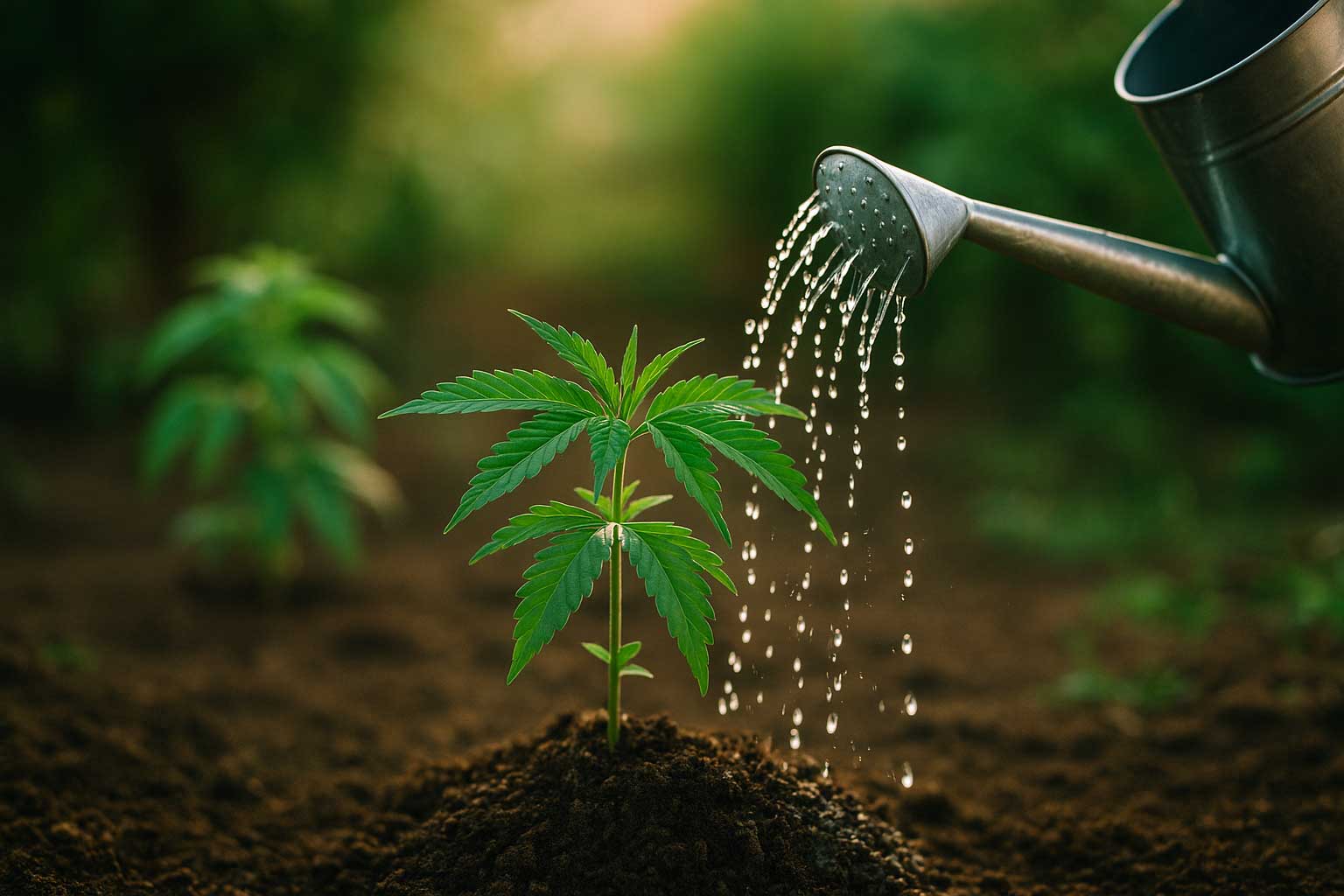
Simple fix: Water by need, not by calendar. Let the top 2–3 cm (≈1 in) dry before watering soil. In coco, irrigate smaller volumes more frequently to light runoff. Learn pot weight (dry vs. hydrated) to time irrigation accurately.
🌤️ 2) Light or Heat Stress
Too much intensity or heat can cause midday “prayer” or droop as plants try to conserve moisture.
What to look for
- Droop during peak light hours; perk up after lights dim
- Upward curl or crispy edges on top leaves
- Canopy temps running hot
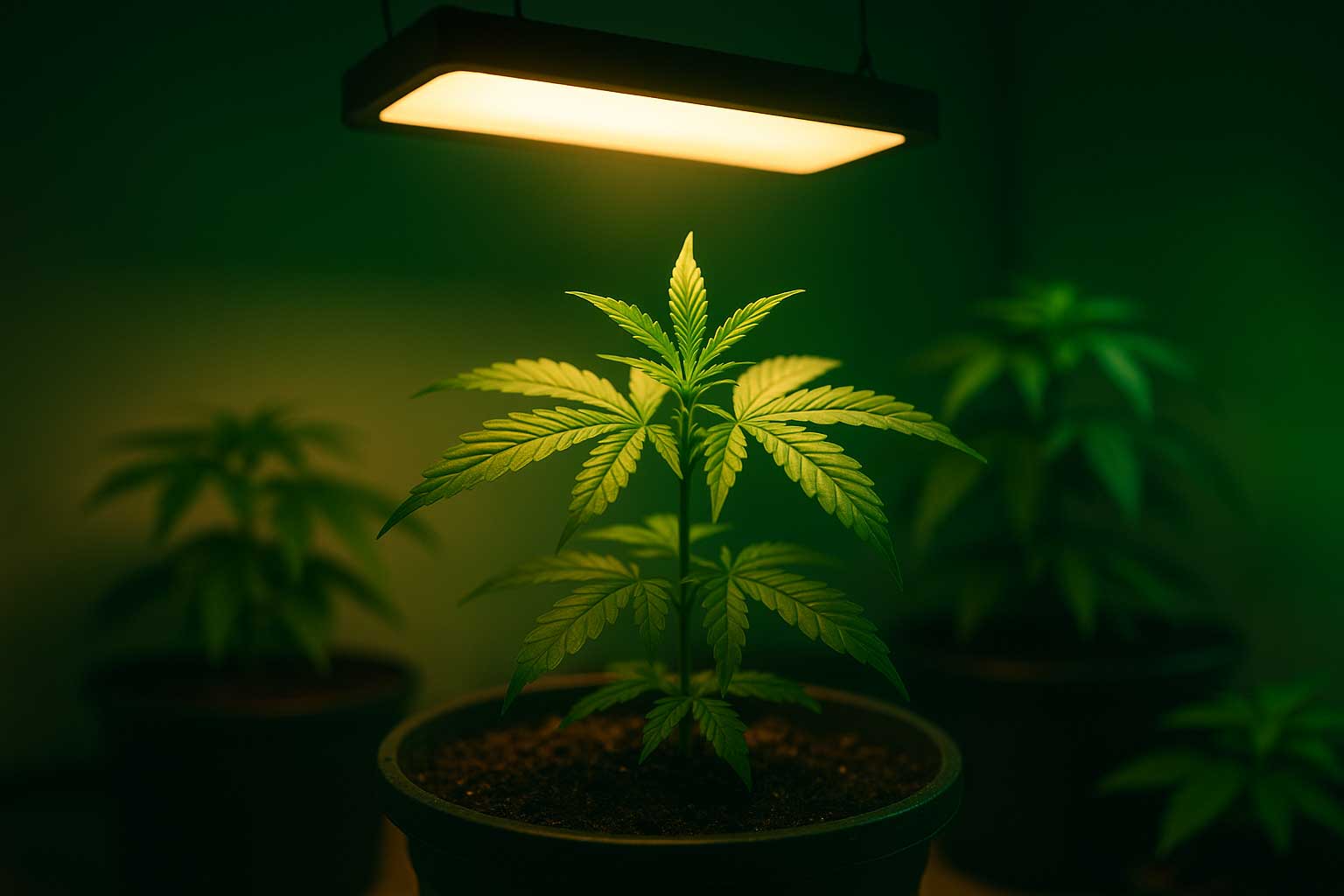
Simple fix: Raise or dim LEDs gradually. Aim for canopy temps around 22–28 °C (72–82 °F). Veg PPFD ~300–500 µmol/m²/s; flower ~600–900 µmol/m²/s. Add gentle airflow to remove heat at the canopy.
🌡️ 3) Temperature or Humidity Swings
Large day–night swings or very low RH reduce leaf turgor and cause droop, especially on tender growth.
Targets (indoor)
- Vegetative: 22–28 °C (72–82 °F), RH 50–65%
- Flower: 20–26 °C (68–79 °F), RH 40–55%
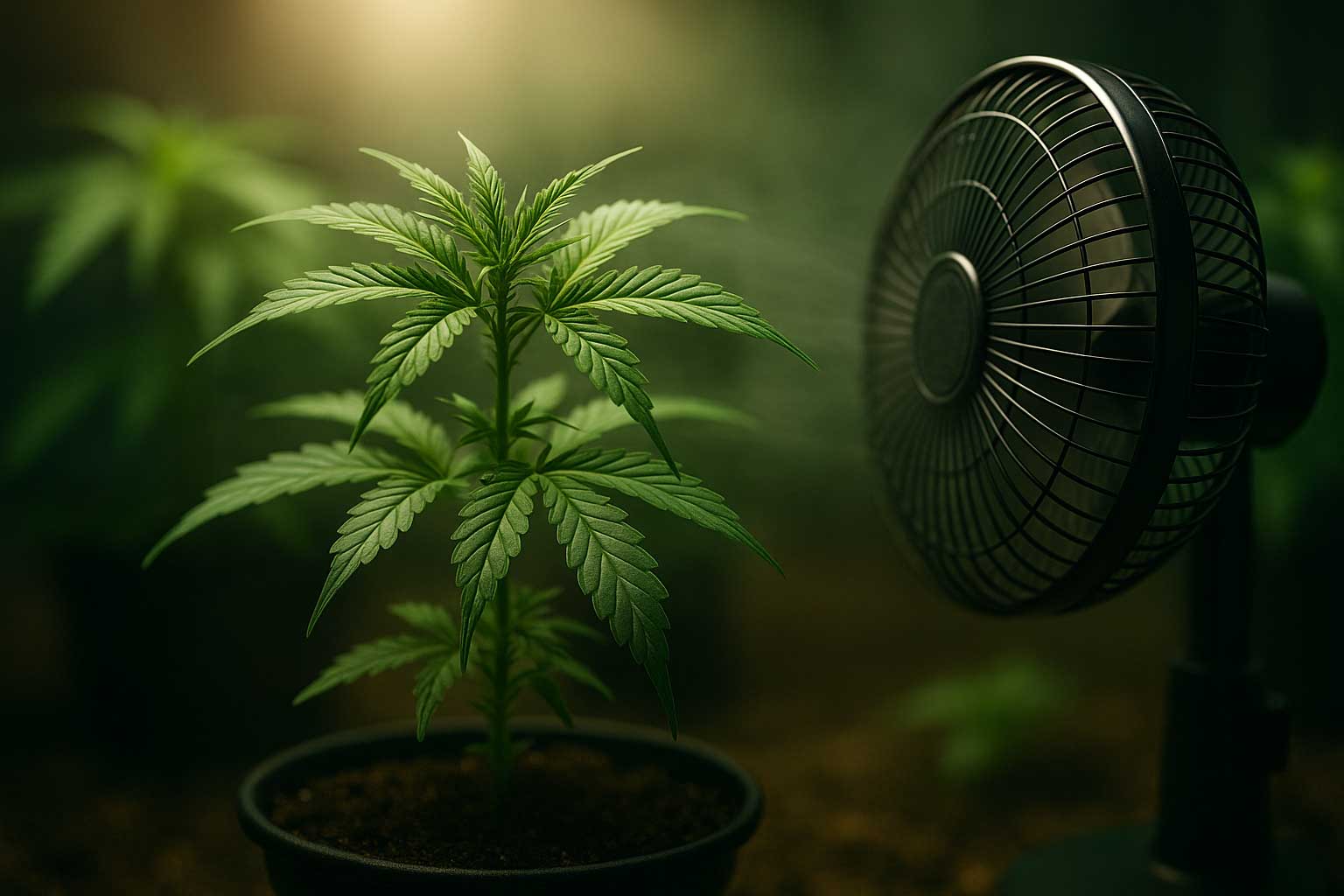
Simple fix: Stabilize temps and RH with an exhaust fan, humidifier/dehumidifier, and a small oscillating fan. Avoid cold drafts and big lights-off drops; aim for modest day–night deltas (≈2–4 °C / 3–7 °F).
🌿 4) Root Problems (Rootbound, Compaction, or Damage)
Restricted or unhealthy roots can’t supply water fast enough, leading to persistent droop.
What to look for
- Water runs straight through; medium dries too quickly
- Roots circling the pot or visible at drain holes
- Brown, mushy roots (rot) or sour smell
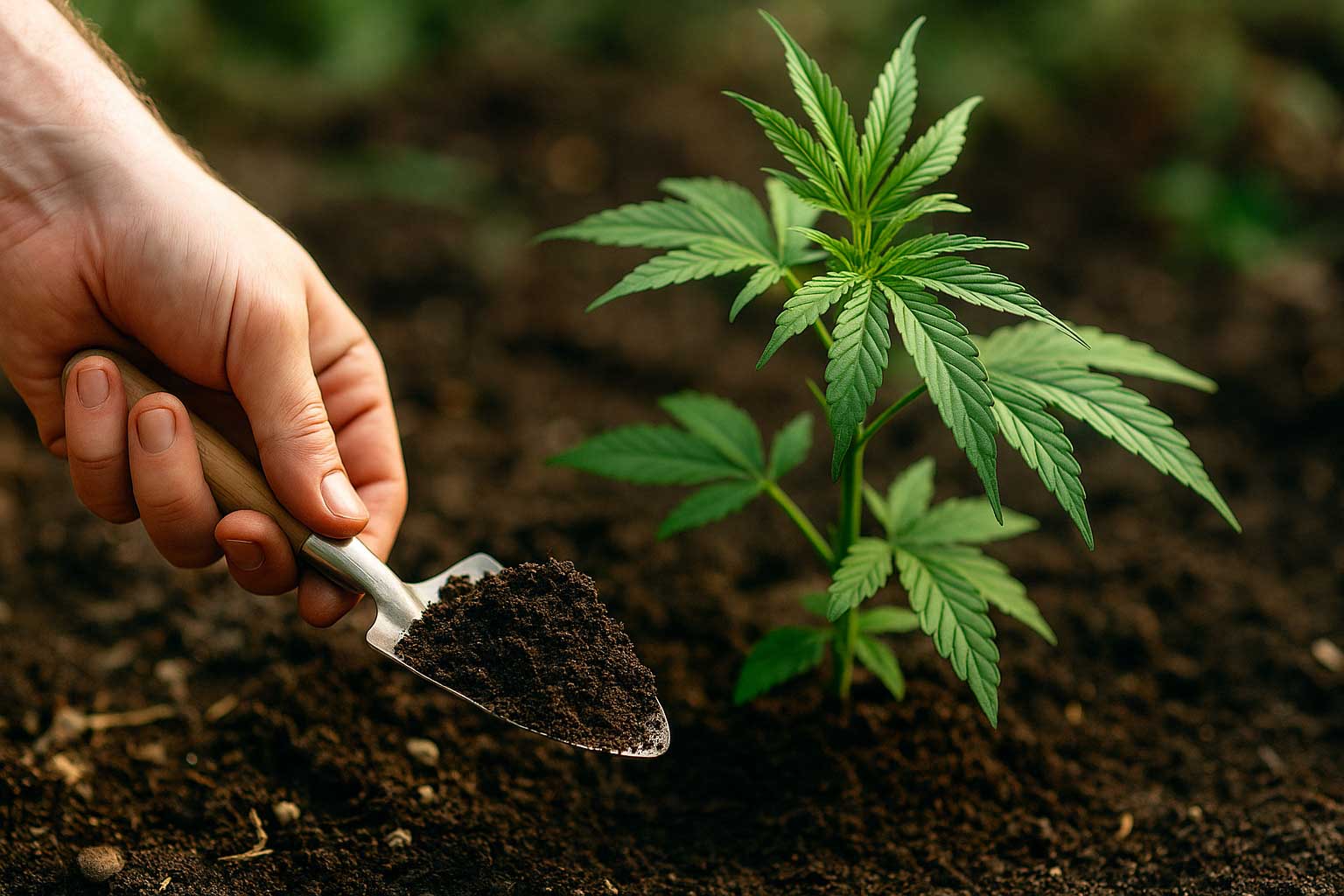
Simple fix: Up-pot to a larger container (e.g., 1–3 gal → 5–7 gal) with airy medium (add perlite). If rot is present, trim damaged roots, improve drainage, and replant in fresh, well-aerated mix; reduce watering volume until recovery.
🧪 5) Nutrients & pH Out of Range
Excess salts or pH drift can interrupt uptake, reducing vigor and causing wilted posture.
Quick checks
- pH: Soil 6.0–7.0; Coco/Hydro 5.8–6.2
- Salts: White crust on surface; leaf tip burn
Simple fix: Flush with pH-balanced water to reset, then feed at ~50% of the schedule. In soil, feed less frequently; in coco, lower EC but irrigate more consistently.
🔌 6) Transplant or Training Shock
Recent transplanting, topping, or low-stress training can cause temporary droop while plants recover.
What to look for
- Recent manipulation followed by short-term wilt
- Otherwise healthy color and vigor
Simple fix: Keep environment dialed, avoid overwatering, and give 24–72 hours. Most plants bounce back quickly with stable temps, RH, and gentle light.
🕷️ 7) Pests or Disease
Root or leaf pests (e.g., fungus gnats, spider mites) and some pathogens can sap vigor and lead to droop.
What to look for
- Gnats hovering over medium; larvae damage roots
- Stippling/webbing on leaves (mites)
- Localized wilt with discolored stems (pathogen)
Simple fix: Improve hygiene and airflow; use yellow sticky traps for gnats; allow proper dry-back. For foliage pests, apply gentle insecticidal soap or neem (spot-test). Quarantine new plants before entry.
🌾 Quick Diagnosis Table
| Cause | Typical Signs | Fast Fix |
|---|---|---|
| Overwatering | Droop while wet, slow dry-back | Increase aeration; longer intervals |
| Underwatering | Light pot, dry medium | Deep, even watering; rehydrate |
| Light/heat stress | Midday droop, crispy edges | Raise/dim light; 22–28 °C |
| Root issues | Fast runoff, circling roots | Up-pot; fresh airy medium |
| pH/salt buildup | Tip burn; stalled vigor | Flush; resume light feed |
| Shock (training/transplant) | Short-term wilt post-work | Stable env; wait 24–72 h |
| Pests | Gnats, stippling, webbing | Hygiene; traps; gentle IPM |