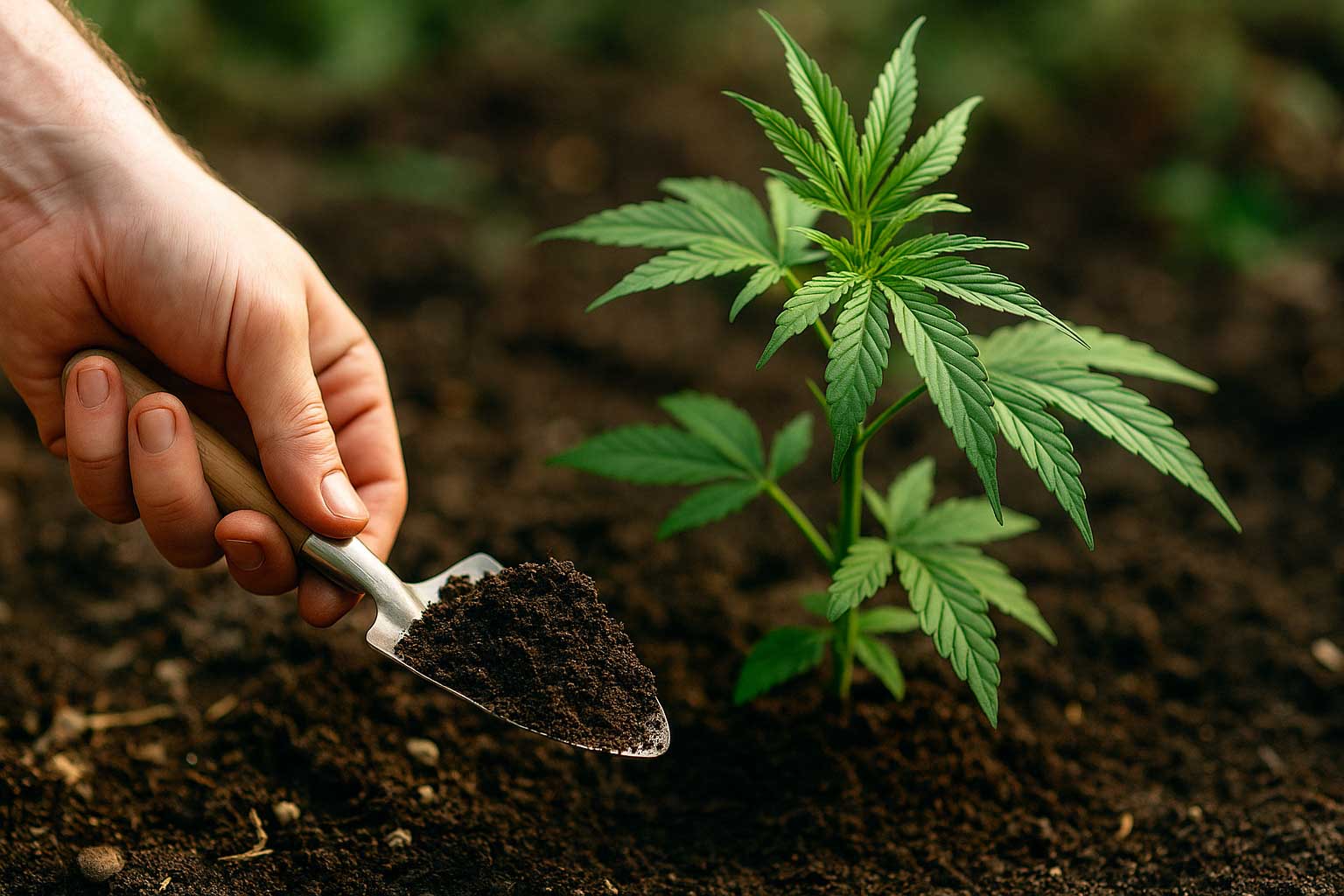
How to Know If Your Cannabis Soil Has Enough Nutrients
Healthy cannabis starts in the root zone. If your soil is short on nutrients—or locked out by pH—growth slows, leaves fade, and yields suffer. This beginner-friendly guide shows you how to read plant signals, check soil health, and keep nutrition balanced from seedling to harvest.
Educational content for adults in legal regions. Always follow local laws and cultivate responsibly.
🌱 What “Enough Nutrients” Looks Like
- Leaves are a rich, natural green (not too dark or pale)
- New growth emerges smoothly with steady internode spacing
- Stems hold themselves upright; overall vigor is good
- No persistent spotting, tip burn, or unusual leaf curl
When nutrition is right, plants grow predictably and recover quickly after light pruning or training.
🧩 Common Signs Your Soil Is Lacking Nutrients
- Pale or yellowing lower leaves (N): older leaves fade first
- Purpling on stems/leaf veins (P): especially in cool temps or low P
- Weak stems, slow growth (overall deficiency): plant looks “tired”
- Interveinal yellowing (Mg/Fe): green veins with yellow between
Note: Deficiency “look-alikes” can also be caused by pH out of range or overwatering. Always check those first.
🧪 Quick Checks You Can Do Today
1) pH Test (Soil Runoff)
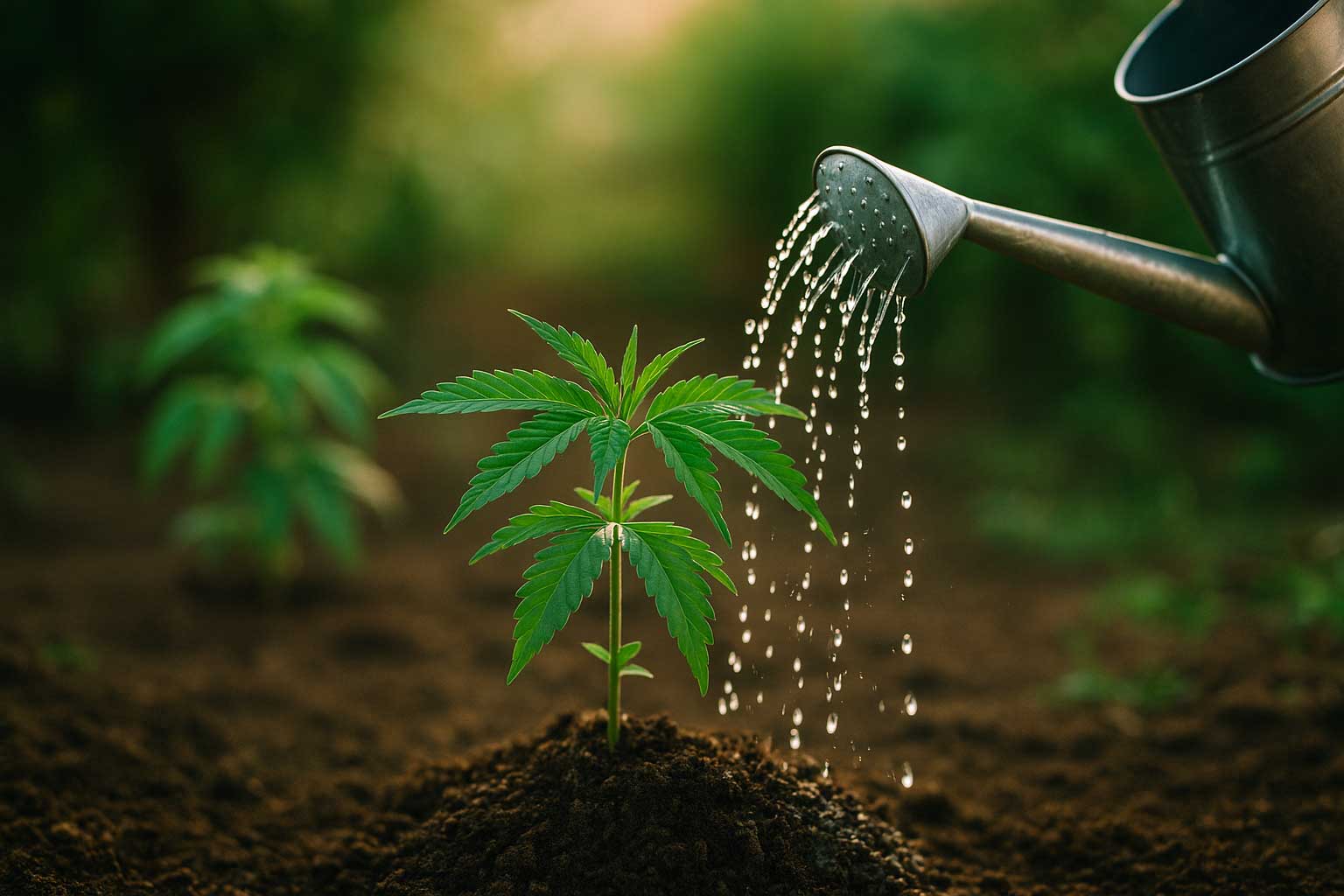
- Water the pot until slight runoff; test runoff with a pH pen or drops
- Target soil pH: 6.0–7.0
- If outside this range, nutrients may be present but locked out
2) Visual + Growth Rate
- Compare new vs old leaves; deficiencies often show in predictable places
- Track height/leaf count weekly—plateaus can indicate nutrient or pH issues
3) Pot Weight & Watering Rhythm
- Chronically soggy soil = poor oxygen = poor uptake (looks like deficiency)
- Let the top 2–3 cm (≈1 in) dry before watering again
🌿 Feeding Basics by Stage (Soil)
- Seedlings: Plain, pH-balanced water; avoid strong nutrients
- Vegetative: N-forward feed at ~50% of label; watch tips for burn
- Flowering: Reduce N; increase P/K; maintain moderate feeding
Tip: If using a “hot” or amended soil, delay bottled nutrients until the plant asks (slight fade on lowers).
🪴 Organic Soil Signals (Living Soil & Amendments)
- Healthy smell: earthy, not sour
- Surface life: occasional springtails/beneficials indicate activity
- Even moisture: no hydrophobic dry spots
Gentle top-dress: worm castings + light compost; water in with plain, pH’d water. Reassess in 7–10 days.
⚖️ Avoiding Overfeeding & Salt Buildup
- Early “burn” signs: brown tips, very dark green leaves, clawing
- Fix: flush lightly with pH-balanced water; resume at lower strength
- Alternate water → feed → water in soil to reduce salt accumulation
🧰 Simple Decision Flow (Beginner Friendly)
- Check pH: runoff 6.0–7.0? If not, correct pH first
- Check watering: not soggy? good dry-back? adjust if needed
- Check symptoms: pale lowers (N), interveinal (Mg/Fe), etc.
- Light feed: apply half-strength, stage-appropriate nutrients
- Observe 7–10 days: look for greener new growth and improved vigor
📊 Quick Reference Table
| Issue | What You See | Fast Check | Simple Fix |
|---|---|---|---|
| Overall deficiency | Slow growth, general pale color | Runoff pH in range? | Half-strength, stage-appropriate feed |
| Nitrogen (N) low | Lower leaves yellow first | pH 6.0–7.0; watering rhythm | Gentle N-forward veg feed |
| Magnesium/Iron low | Interveinal yellowing on new/old leaves | Check pH; avoid overwatering | Balanced feed; Mg supplement if needed |
| Salt buildup | Burnt tips; dark, clawing leaves | Crust on soil; recent heavy feeds | Light flush; resume lower EC/strength |
| pH lockout | Deficiency despite feeding | Runoff out of 6.0–7.0 | Correct pH; feed lightly after reset |