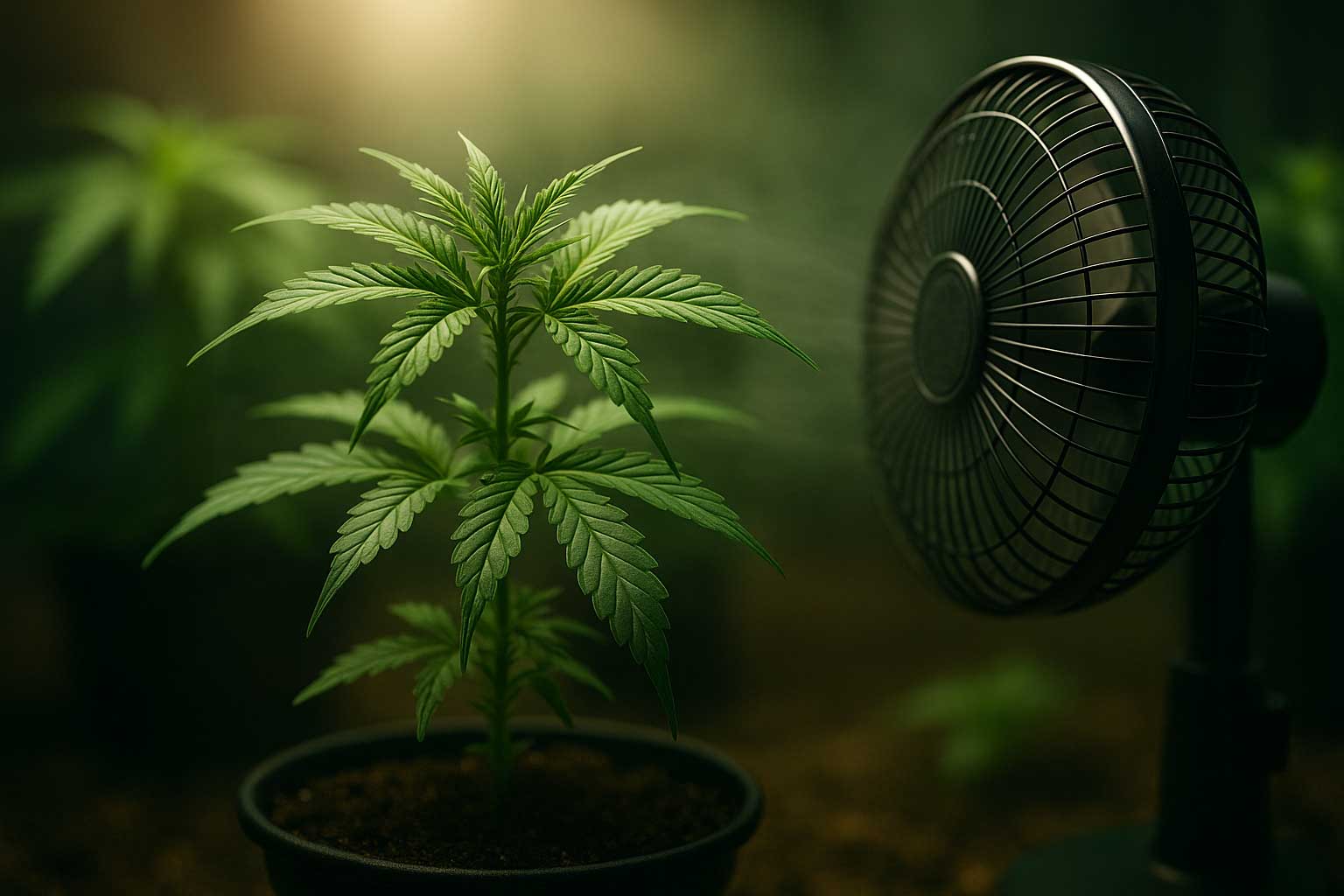
Why Good Airflow Matters for Cannabis Growth
Airflow is one of the most overlooked parts of growing healthy cannabis plants. Just like people, plants need fresh air to breathe, grow strong, and stay healthy. Proper airflow strengthens stems, prevents mold, and helps your plants use light and nutrients efficiently. Let’s explore how and why airflow makes such a big difference — and how to set it up right.
Educational content for adults in legal regions. Always follow local laws and cultivate responsibly.
🌬️ Why Airflow Is So Important
Healthy cannabis plants constantly exchange gases through their leaves — taking in carbon dioxide (CO₂) and releasing oxygen. Without good air circulation, CO₂ levels drop and humidity rises, creating the perfect environment for pests and mold.
- Strengthens stems: Gentle movement mimics natural wind, encouraging thicker, sturdier stalks.
- Prevents mold and mildew: Moving air keeps humidity low around leaves and buds.
- Improves CO₂ exchange: Fresh air means faster photosynthesis and better growth.
- Balances temperature: Prevents hot or stagnant zones near grow lights.
💨 The Basics of Airflow Setup
You don’t need an expensive ventilation system — just the right setup for your grow space size.
1. Oscillating Fans
- Place 1–2 small fans at canopy level.
- Keep air moving gently (not blasting directly on plants).
- Rotate direction daily or use fans that oscillate automatically.
2. Exhaust Fan (For Indoor Tents or Rooms)
- Removes hot, humid air and pulls in fresh air.
- Set up an exhaust fan at the top of your space (hot air rises).
- Pair with a passive intake or small inlet fan near the bottom.
3. Passive Air Exchange
Even if you’re not using fans, keep small vents or windows slightly open to let fresh air circulate. Stagnant air can trap excess humidity and carbon dioxide quickly.
🌡️ Balancing Temperature and Humidity
Airflow goes hand-in-hand with temperature and humidity control. Here’s what most cannabis plants prefer:
| Stage | Temperature | Humidity (RH) |
|---|---|---|
| Seedling | 22–26°C (72–79°F) | 65–70% |
| Vegetative | 22–28°C (72–82°F) | 50–60% |
| Flowering | 20–26°C (68–79°F) | 40–50% |
Tip: Use a hygrometer to track humidity and temperature at canopy height — that’s where it matters most.
🪴 Signs of Poor Air Circulation
- Drooping or weak stems that can’t hold leaves upright
- Hot spots or uneven temperatures under your lights
- Mildew or mold on soil or leaves
- Slow or uneven growth across your canopy
Quick fix: Add a small oscillating fan and reposition your plants for better airflow coverage. Even a little breeze can make a huge difference.
🌿 Advanced Tip: Air Movement During Flowering
During flowering, airflow becomes even more critical. Dense buds can trap moisture, which leads to bud rot. Aim for gentle air circulation through the canopy, not just above it.
- Use two small fans at different heights to move air evenly.
- Keep humidity between 40–50% to avoid mold.
- Don’t aim fans directly at buds — indirect movement is best.